Patient and Provider · Digital Health
Rheumera
Building a bridge between patients and providers in rheumatology from the ground up.
Role
Head of Product, Founding Team
Timeline
July 2023 – Present
Platform
Web + Mobile
The problem worth solving
Rheumatology patients often go six months between appointments. In that gap, symptoms flare, medications stop working, and life gets harder. By the time they sit down with their doctor, most of that context is lost to memory. Clinicians are making care decisions with incomplete pictures, and patients are trying to reconstruct months of experience in a 20-minute visit. For a population managing a chronic condition that often comes with high medication costs, those decisions carry real weight.
Rheumera set out to close that gap with continuous symptom monitoring that gives clinicians real data, and gives patients a way to be heard between visits. The result is better care decisions, more efficient triage, and a clinical relationship that doesn't go dark between appointments.
What I walked into
I joined as a founding team member in mid-2023, part-time at first. There was a newborn app and portal, no mature design system, and a new product team. My job was to work closely with our founders to figure out where we needed to go and what we needed to get there. Three years later, we have a live platform serving multiple clinic locations, a weekly release cadence, and a patient experience I'm genuinely proud of.
What we built
The patient experience — three iterations, one north star
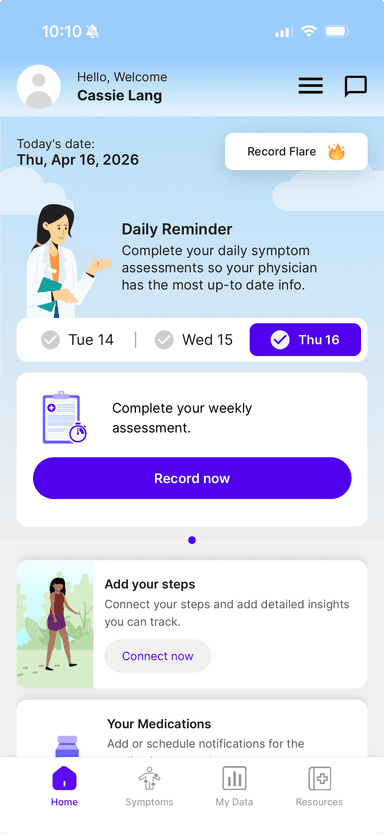
The patient-facing app has been my most sustained and personal design challenge. I joined mid-way through the second design iteration in 2023, and led the third from the ground up in May 2025.
Each version got closer to a principle that now guides all of our patient-facing decisions: identify the single most important action you want the patient to take, and if you have their attention, thoughtfully earn one or two more. It sounds simple. Getting there required stripping away a lot.
Earlier versions tried to do too much at once. The latest iteration starts with the patient's most immediate need and builds trust before asking for more. Engagement went up not because we added features, but because we got clearer about what mattered most.
The clinical layer
Symptom data only matters if it changes what happens in the clinic. But healthcare settings are notoriously resistant to workflow change. You can't ask providers to go somewhere new to find information. If we wanted to close the feedback loop for patients and make their between-visit data actually mean something, we had to meet clinicians inside the workflows they already lived in.
That started with getting patient symptom summaries into the chart. The delivery mechanism evolved from a physical printout added manually, to an automated integration that pushed the summary directly into the patient's record. But even once we solved delivery, we kept iterating on the content itself.
Our first version included a chart with a graphic visualization of the data. We stripped it back to a plain paragraph. Then we added an expandable section with additional context beneath a summary paragraph. Where we've landed, and where we're seeing the most clinical value, is a hybrid: a couple of key graphs, clear metrics, and a narrative section underneath. Providers can scan the signal fast, and go deeper if they want to. Getting there took more iterations than we expected, but it taught us that the right format for clinical decision support isn't about what's technically impressive. It's about how quickly a busy provider can extract what they need.
The same principle shaped how we built the clinic staff experience. For patients to keep submitting data, they need to believe someone is actually looking at it. That meant the monitoring side of the portal had to be actionable, not just informational.
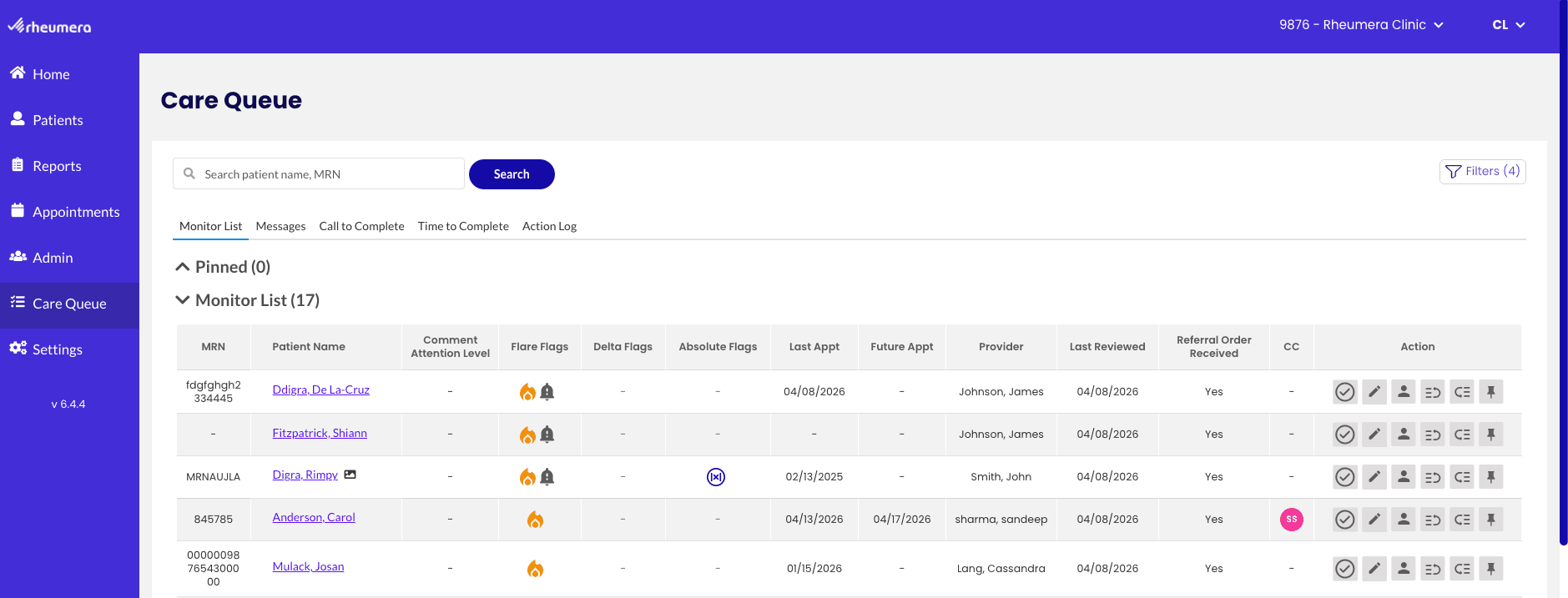
We started with a patient list showing submission dates, activity days, and unread messages. Administrators weren't acting on it. So we added clearer signals: priority flags, flare indicators, and patients who had reported severe pain or a concerning weekly assessment. That was better, but still not direct enough.
What emerged from that friction was the care queue: a dedicated view that surfaces exactly who needs attention next, organized around unread messages, monitoring obligations, and patients who need time attributed to them.
Still writing this story.
This case study is in progress. Reach out if you'd like to hear more.
Contact for more informationNext case study
Gift Cards →