Operations · B2B
Warehouse Distribution Module
Listening to a market shift and building the product that opened a new segment and closed the biggest deal in company history.
Role
Product Manager & Product Designer
Timeline
Research Q4 2021, Launch July 2022
Platform
Web
The opportunity
COVID didn't just disrupt healthcare supply chains — it changed how healthcare organizations thought about managing them. Through conversations with prospective customers throughout 2021, a pattern kept emerging: organizations were moving away from direct purchasing and toward internal distribution models, centralizing inventory at one location and redistributing to satellite facilities on demand.
Our platform had a workaround for this workflow. It was clunky, and everyone knew it. The question was whether this shift was permanent enough to justify building something purpose-built. I believed it was.
Validating before building
Before committing development resources, I designed a two-part validation study to test whether this was a real need or just a vocal few.
A quantitative survey went to 100 current users. Fifteen responded, rating warehouse functionality as the second most requested feature with an average score of 1.83 on a five-point agreement scale. Five qualitative interviews with customers actively using our workaround filled in the why behind the numbers.
Three needs came through clearly in every conversation: requesters at satellite locations needed something intuitive, close to the experience of ordering from an external vendor. Central supply managers needed visibility and control over incoming requests. And both sides needed real-time transparency into status and communication.
The sales team added another layer: this wasn't just a retention play. A purpose-built warehouse module would open doors to larger healthcare systems and let us compete in the acute care hospital market, deals that were currently out of reach.
The solution
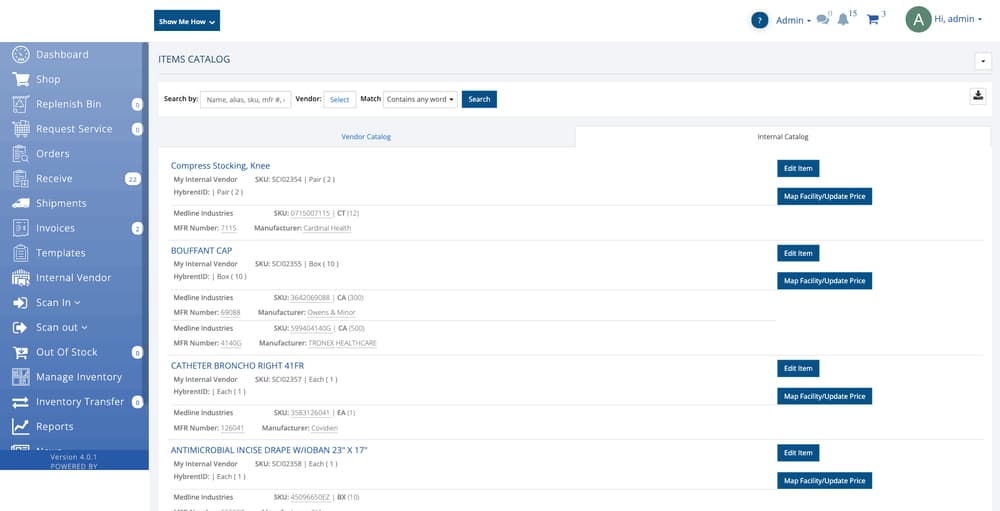
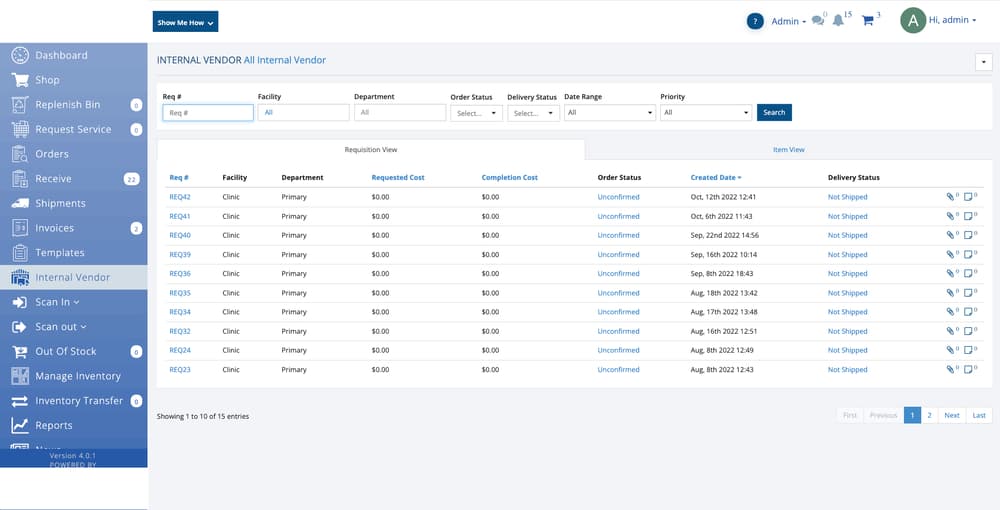
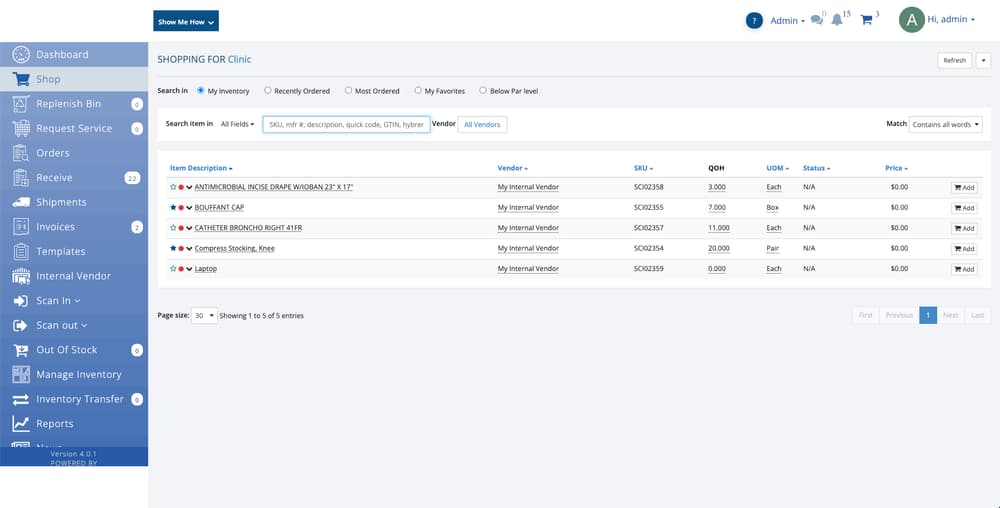
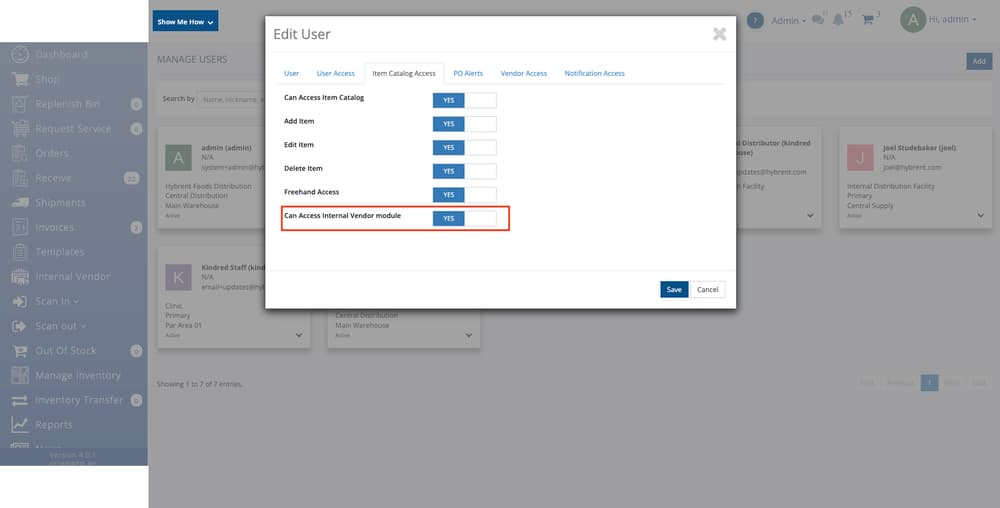
I designed the module around a concept that made the engineering lift manageable: treat the central supply location as an internal vendor within the existing platform. Requesting facilities used the same shopping interface they already knew. Requisitions moved through familiar approval workflows. The new work was primarily on the warehouse side — inventory management, fulfillment tracking, and a real-time dashboard for central supply managers.
This approach meant we could build something genuinely new without asking users to learn something genuinely new. That constraint shaped every design decision.
The impact
The module launched as part of our 4.0 release in July 2022. Within 90 days, five beta customers had onboarded. More importantly, it was the deciding factor in closing the largest customer in the company's history — a healthcare system that would not have considered us without this capability. It also generated pipeline opportunities worth three times our typical deal size and opened market segments we hadn't been able to touch before.
What I'd do differently
I would have pulled beta customers into the design phase earlier, through co-creation sessions rather than waiting for post-launch feedback. We got good signal once the product was in their hands, but some of what we learned could have shaped the initial design if we'd asked sooner.
The takeaway
The best product decisions I've made started with listening — to customers, to the market, to signals that something is shifting. This one started with a pattern I kept hearing in sales conversations and ended with the biggest deal the company had ever closed. Validation isn't just a risk management tool. Sometimes it's how you find the opportunity in the first place.
Next case study
Rheumera →